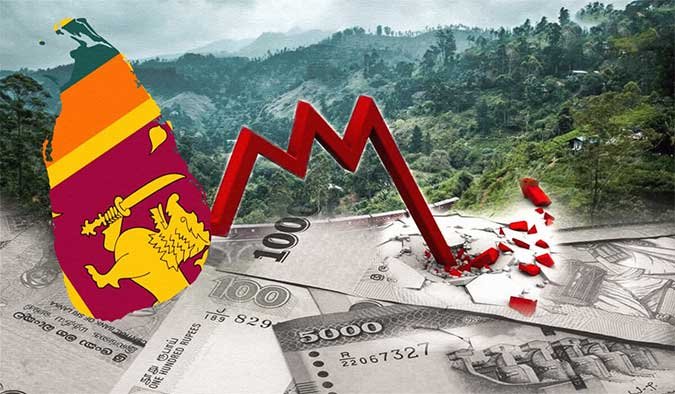
IFC Warns Reform Slippage Could Undermine Sri Lanka’s Economic Stability
- Editor
- January 27, 2026
- Banking and Financial, Business News
- economics, sri lanka economic crisis
- 0 Comments
Sri Lanka’s economic rebound between 2024 and 2025 represents one of the sharpest post-crisis turnarounds in recent emerging market history. However, IFC officials warn that stabilisation alone is not enough, and that the real test of the IMF-supported programme lies in converting short-term gains into long-term resilience.
Addressing investors, IFC’s Gregory Smith acknowledged that few would have predicted Sri Lanka’s current position two years ago. Inflation has normalised, growth has averaged 4–5% for ten straight quarters, and GDP per capita has recovered to approximately $4,800 up from crisis-era levels seen in early 2024.
Compared with last year, the macroeconomic environment in 2025 is clearly stronger. Foreign exchange reserves have nearly doubled to $6.8 billion, domestic interest rates have fallen sharply, and the Central Bank’s net foreign assets have returned to positive territory after three years of decline. These improvements reflect improved policy credibility under the IMF framework.
Nevertheless, Smith argued that stabilisation has come at a cost that now needs recalibration. Public investment has fallen to around 2.1% of GDP as authorities prioritised IMF targets. While this restraint supported fiscal consolidation, it risks undermining future productivity if sustained too long. Plans to raise capital expenditure to 4% of GDP by 2026 will test the Government’s ability to spend efficiently and transparently.
Revenue mobilisation remains a clear success, with government income rebounding to 15.6% of GDP from the unsustainable 8% seen during 2020–2022. This creates fiscal space for service delivery, but high interest costs still consuming 7.5% of GDP continue to crowd out development spending.
The composition of growth also raises questions. Tourism and remittances have powered the recovery, with arrivals reaching 2.3 million and remittance inflows climbing to $8 billion. While these sectors have restored external balance, FDI inflows remain stubbornly weak at under 1% of GDP, unchanged from 2024. Smith described this as the most disappointing indicator, pointing to the need for export competitiveness, deeper capital markets, and skills alignment.
Crucially, Smith emphasised that IMF compliance is not a technocratic exercise but a political and social one. Falling borrowing costs signal confidence, but they also create temptation to relax discipline. Any deviation, he warned, would first show up in higher short-term government yields.
Rather than viewing reform fatigue as inevitable, Smith urged policymakers and citizens alike to institutionalise the lessons of the crisis. Stability can deliver 3-4% growth, but reaching 7% enough to double the economy within a decade requires sustained reform, not selective memory.