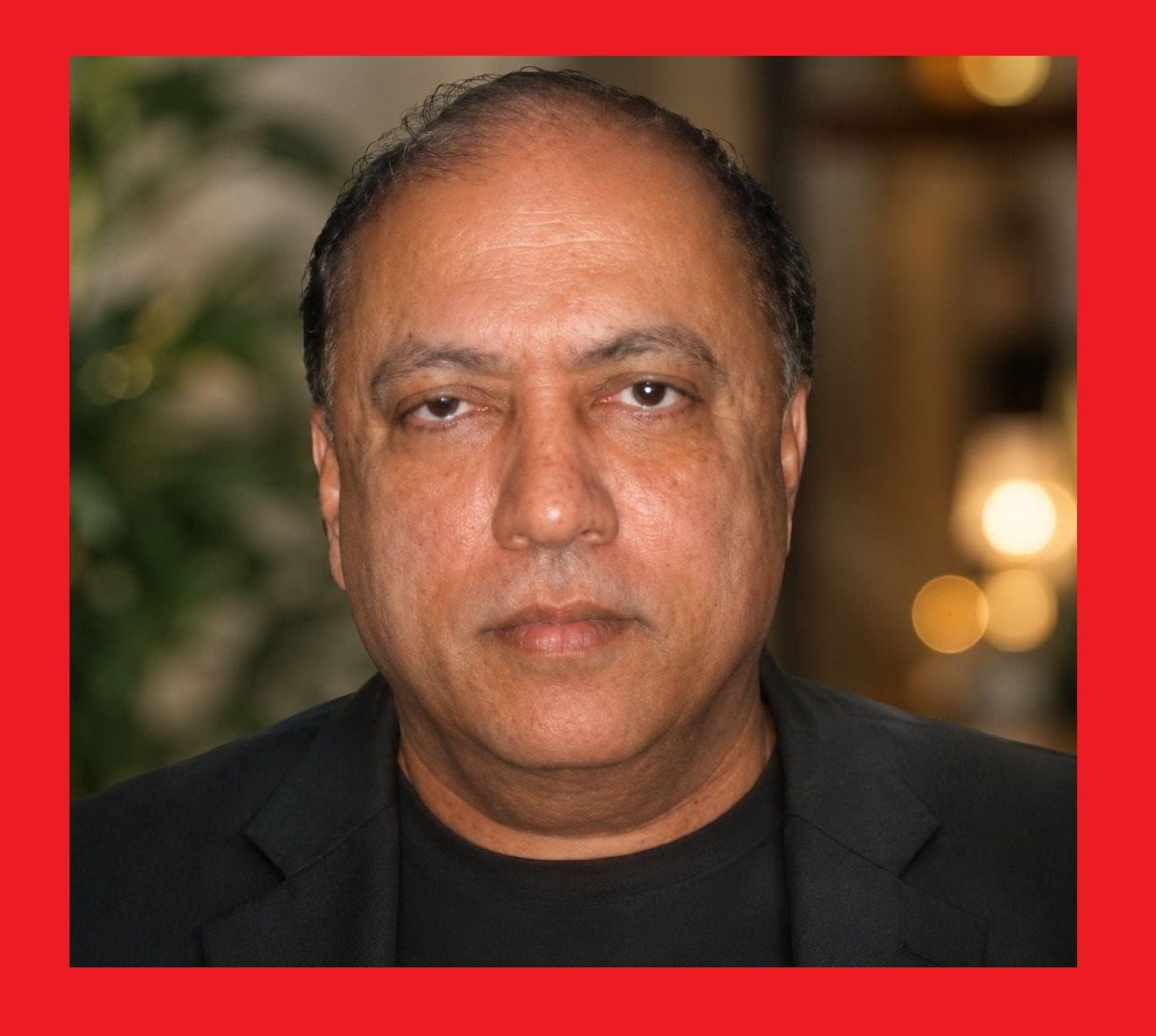
A Journalist Who Would Not Look Away (A tribute to D B S Jeyaraj (1950–2026) – Lionel Bopage
On the 17th of May 2026, Mr D B S Jeyaraj published his final column in ‘The Morning’. It appeared, as his columns had for years, without fanfare, a piece of careful, considered journalism from a man who happened to be writing from Canada about a country he had been forced to leave nearly four decades earlier. Days later, he was gone. His death marks the end of a body of work that was, in its discipline, its moral seriousness, and its sheer breadth, without parallel in Lankan Tamil journalism.
DBS, as he was known to many, began his career at Virakesari, the Tamil daily, in the late 1970s, at precisely the moment when Sri Lanka was descending into the ethnic conflict that would define the island for a generation. He reported on the civil war between the Sri Lankan armed forces and the Liberation Tigers of Tamil Eelam from the early 1980s onward, contributing to The Island and The Hindu, and later to the BBC Tamil service. He reported from close proximity, with a wide network of sources, and with the kind of meticulous fact-checking that made his work reliable in an environment where reliability was rare and often dangerous.
The danger was not abstract. In July 1983, the anti-Tamil pogrom that convulsed Sri Lanka forged his journalistic voice. He returned to Colombo determined to document events as they unfolded. His arrest in October 1987 — by the Sri Lankan Criminal Investigation Department, under Indian diplomatic pressure — was not the result of militant sympathies but of their opposite: he had published an interview with LTTE leader Mahattaya that contradicted official narratives. He was released only after significant public intervention. He left for Harvard University in 1988 and eventually settled in Canada, continuing to report on Sri Lanka with undiminished commitment from a safer distance.
From exile, in the mid-1990s he founded Manjarie, an independent Tamil weekly. It reported candidly on developments in Sri Lanka, often at considerable risk. Violent assaults and financial pressures forced its closure in 1995. Yet, he continued writing. He wrote a weekly column examining political issues and Tamil popular culture in India, tracing political histories and familial connections to Sri Lanka. He did not retire. He did not moderate. He wrote until the end.
What distinguished DBS from many of his contemporaries was not only his courage, which was conspicuous, but his insistence on holding his own community to account. He documented atrocities committed by the Sri Lankan state and by the LTTE with the same forensic precision. He traced what he called the phenomenon of “traitorisation” — what he described as a “terrible Goebbelsian process ”. It is a process by which political rivals were falsely branded as traitors through the force of propaganda rather than evidence. He traced this process from the era of G G Ponnambalam through the rise of the Tamil United Liberation Front and into the LTTE’s systematic destruction of anyone who advocated a different political path.
In one passage that has been widely quoted since his death, he mapped the progression with mordant clarity: “In the forties, any Tamil not subscribing to ‘fifty-fifty’ was a traitor. After Independence, any Tamil rejecting Federalism was a traitor. Later on, any Tamil opposing a separate Tamil state became a traitor. Then any Tamil protesting against armed struggle became a traitor.” His journalism documented each of these victims with the same precision and moral seriousness, regardless of which side had applied the label.
He was particularly attentive to the Tamil leaders who believed the path forward lay in negotiation and democracy — leaders who were assassinated by the LTTE precisely because their political credentials and international stature challenged the LTTE’s claim to be the sole legitimate representative of the Tamil people. DBS examined those assassinations with moral clarity. He understood that the LTTE killed them not despite their commitment to Tamil rights, but because of it. He said so repeatedly, and at personal cost.
Human Rights Watch and Amnesty International relied upon his work. Many readers in the diaspora turned to him because he provided what they could find nowhere else: journalism that refused the comfort of a single narrative, that acknowledged complexity, that held the community accountable to itself. His credibility extended across ethnic lines. Sinhalese, Tamil, Muslim and Burgher Sri Lankans read him. They trusted him. That trust was earned through decades of refusing to distort.
He was, by all accounts, a man who would not publish what he could not verify. His colleagues described his meticulous approach to fact-checking as a defining characteristic — he was not interested in being first, but in being accurate. In an environment saturated with propaganda from multiple directions, that discipline was not merely a professional virtue. It was a form of resistance.
His legacy is an archive: decades of reportage, commentary, and analysis that constitutes the most comprehensive journalistic account of the Sri Lankan ethnic conflict from a Tamil perspective. Future historians will consult it. It documents not only the violence and the political failures, but the individuals and the leaders killed, the communities displaced, the aspirations deferred with the specificity that only someone deeply embedded in that world could provide. He chronicled the permanent dispersal of Tamil communities from their historic habitation, and the political tragedies that accompanied it, with a rigour no one else matched.
He was in virtual exile for most of his working life, yet his love for Sri Lanka and his commitment to its democratic future never diminished. He remained committed to his work despite declining health, sharing columns until shortly before his death. That constancy — that refusal to be worn down — was itself a statement about what journalism, at its best, can be.
DBS demonstrated, across four decades, that it is possible to love one’s community and still tell the truth about it. That moral courage is not a betrayal of solidarity but its highest expression. That the label of traitor, so freely applied to those who insist on honesty, says everything about those who apply it and nothing about those to whom it is applied.
He celebrated life by insisting on truth. He did so when it cost him his safety. He did so when it cost him his newspaper. He did so for decades afterwards, in exile, building a body of work that stands as both journalism and testimony.
The void he leaves will be extremely hard to fill. Perhaps it will not be filled. We extend our heartfelt condolences to his wife and family and to all those who knew him. And we honour him as he would have wished to be honoured: soberly, honestly, and with gratitude for the work he left behind.
25 May 2026
